
I

IANS News

42 Articles

Indo-Asian News Service or IANS is a private Indian news agency. The IANS was founded by Indian American publisher Gopal Raju as the India Abroad News Service. It was later renamed the Indo-Asian News Service. The IANS has its main offices located in Noida.

Articles Written By IANS News

Haunted Qutub, Lotus Temple with near-zero footfalls
2274 days ago
Lifestyle

Haunted Qutub, Lotus Temple with near-zero footfalls

New Delhi, March 18 (IANS) Government's aggressive social distancing pitch coupled with Archaeological Survey of India (ASI) shutting all its protected sites from Tuesday has left Delhi's two iconic structures -- the Qutub Minar and Lotus Temple desolate, giving an eerie feeling. ## Qutub being an ASI protected site -- the only sight that greets you is a closed reception, few private security guards and an indifferent snack shop outside. ## "I have just opened it," said Ram Lal, who sells puffs outside the Qutub Minar. "This time of the year, it used to be peak season as its neither too hot nor cold. But corona has left us without business this year," he adds. ## A government employee present at the closed Qutub reception told IANS requesting anonymity, "Still we find 10 to 15 people turning up here unaware of the restrictions. Last year, mid-March, we had a tough time managing crowds. Such is the irony." ## To put things into perspective, in 2018-19, there were 2.9 million tourists who visited Qutub Minar. The data was shared by the Culture Ministry in Parliament. ## Ironically at one corner, "stand in queue" bird stands alone amid the deserted premise of the 14th century victory tower built Sultans Qutb-ud-din Aibak and his son-in-law Iltutmish. ## Though, the situation in Lotus Temple in South Delhi is not as haunting as the Qutub's, but the footfall has decreased by approximately 90 per cent, say the shops outside the structure, whose business too have taken a hit. ## When IANS visited the temple, barely a hundred people were scattered around the vast expanse of the temple premise. The main temple area was closed. ## Subhashish, who started working for the administration of the Lotus Temple barely a month ago told IANS: "I have seen long queues that would run into a few hundred meters. Today there is no queue in the first place. This is unprecedented." ## He added the footfall drastically dropped after this Sunday, around the same time when COVID-19 cases inched closer to 100 in India and touched 7,000 world wide. ## "Corona ka saya hai (It's the shadow of Corona)," said Bablu, who sells banta-soda outside Delhi's iconic structure that has often come to be synonymous with the national capital. He complained, "Dhanda band para hula hai (There's no business)." ## Fakhruddin Ali, a tourist from Kanpur, who had earlier visited the site sounded surprised. Said he could never imagine such an empty Lotus temple, ever. ## This eerie feeling is the result of the government aggressively pitching for social distancing and avoidance of public places to contain the spread of the deadly Coronavirus and bring down the graph that has so far killed two in the country, including an elderly mother from West Delhi and paralyzed all major institutions like schools, gyms, movie theatres, swimming pools. ## India may not have reached China's Wuhan-like shutdown, but the semi-haunted tourist spots of Delhi only speak volumes about how badly the capital has come under the corona-grip. ## For more and the latest news about Lifestyle, stay tuned to us.


Dressing up is very personal: ABD on picking WROGN Active
2275 days ago
Lifestyle

Dressing up is very personal: ABD on picking WROGN Active

New Delhi, March 17 (IANS) Former South Africa batsman AB de Villiers, who was recently roped in as the face of Virat Kohli's clothing brand WROGN, feels that dressing up is very personal, and says "it is important to dress in a way that makes one feel comfortable and confident". ## When asked about his advice for picking the right clothes, the ace cricketer said being comfortable was the most important thing. ## "If you're uncomfortable in what you're wearing, it will show. So always pick styles that fit right, not too tight, not too loose. Then you can start mixing and matching to let your personality shine through," de Villiers told IANSlife. ## "Once you've got this covered, your clothes can complement your personality in a good way", he added. ## The former South Africa captain recently turned 36. He plays for Royal Challengers Bangalore in the Indian Premier League (IPL), during which he had shot for WROGN and sampled the clothing. ## On his association with the brand's activewear and Virat, de Villiers said that the Indian skipper and him have "got along well for many years, on and off the field, and it's great to be working with him at WROGN". ## For more and the latest news about Lifestyle, stay tuned to us.

Kids who do not sleep enough may face mental health issues
2276 days ago
Lifestyle

Kids who do not sleep enough may face mental health issues

London, March 17 (IANS) Is your child getting enough sleep? If not, read this carefully. Researchers have found that children who get the least sleep have the greatest risk of developing mental health issues.## "If we make sure our children get enough sleep, it can help protect them from mental health problems," said study researcher Bror M Ranum, Norwegian University of Science and Technology's (NTNU) in the Norway.## A study of almost 800 children followed over several years shows that those who get the fewest hours of sleep are at greatest risk of developing psychiatric difficulties later, including ADHD, anxiety and depression.## "We're seeing an association between sleep duration and risk of symptoms of emotional and behavioral disorders," Ranum added.## According to the findings, published in the journal JAMA Network Open, boys who sleep fewer hours have an increased risk of developing behavioral issues. Both girls and boys who get less sleep are at greater risk for future emotional problems. The measurements do not indicate anything about the quality of sleep.## Children's sleep was measured with motion sensors every night for a week. The researchers conducted clinical interviews to measure mental health difficulties. These procedures were repeated several times every two years.## The study is part of the Tidlig Trygg I Trondheim project (TtiT - Trondheim Early Secure Study). This is a long-term study that has examined nearly a thousand children when they were 4, 6, 8, 10, 12 and 14 years old.## The researchers also investigated whether psychological difficulties might cause children to sleepless. The data do not indicate this to be the case. Sleep duration influences the risk of later problems, not the opposite.## "Previous studies have also shown that sleep is related to mental health difficulties. But our study is one of the first to investigate this in children over several years, and to use an objective measurement of sleep," said senior author Silje Steinsbekk.## Because people tend to be quite poor at reporting how much sleep they get, scientists cannot completely rely on people's self-reported sleep duration data.## Self-reported sleep duration does not correlate with objective sleep duration measurements.## Laboratory studies measure sleep objectively, but this research study is measuring only the immediate effects and does not comment on whether sleep duration affects individuals' psychiatric health over time.## "Our study shows that the children who sleep fewer hours than others more often develop psychiatric symptoms, even two years later," Steinsbekk said.## The research group has also investigated how many people get too little sleep, and whether or not too little sleep tends to persist throughout childhood.## Very few six-year-olds (1.1 percent) slept less than 7 hours, which is below the internationally recommended sleep guidelines for this age group.## According to the World Health Organisation (WHO), Children with 3-4 years of age should have 10-13 hours of good quality sleep, which may include a nap, with regular sleep and wake-up times.## For more and latest news about Life-Style, stay tuned with us.

Taj Mahal closed, annual Shah Jahan Urs not to be held
2276 days ago
Lifestyle

Taj Mahal closed, annual Shah Jahan Urs not to be held

Agra, March 17 (IANS) The annual three day Urs of Mughal emperor Shah Jahan, builder of the iconic Taj Mahal, will not be held, as scheduled from March 21, as the historic monuments including the Taj in the city have been shut down till March 31, in the wake of COVID-19. ## This will be the first time in the history of the Taj, that the annual Urs will not be held. ## During the three day Urs, entry remains free and a series of functions are organised. Work on the 365 metre long chadar, to be offered, had begun. ## A member of the organising committee said, the convention would indeed be disrupted, but the safety of the country was more important. ## The whole area around the Taj Mahal wears a deserted look. The Taj is visited by around 30,000 people daily. For the past one month there had been a steep decline. ## Agra mayor Navin Jain had asked for closure of the monuments, in a letter to the union tourism minister, a fortnight ago. ## The Agra Development Authority used to earn around Rs 14 crore daily from ticket sales. ## On Tuesday, a pall of gloom descended on the tourism sector, as guides, photographers, taxi drivers, hoteliers were left with no work. ## The once crowded parking areas were vehicle free. The eleven five star hotels and around 25 three star hotels, plus countless guest houses, dharamshalas and smaller hotels are waiting for customers. How long this wait will be, uncertainty continues. ## Only during the 1971 war with Pakistan, the Taj Mahal was closed for more than a week. During the flood in 1978, it was again closed for a couple of days. ## For more and the latest news about Lifestyle, stay tuned to us.

Study finds how heartbreak and hardship shape growing old
2276 days ago
Lifestyle

Study finds how heartbreak and hardship shape growing old

London, March 16 (IANS) From being raised by an emotionally cold mother to experiencing violence, war and bereavement, difficult life events have a profound effect on our physical and mental wellbeing in later life, says a study. ## The findings, published in the Journal of Public Health, showed how a range of life inequalities and hardships are linked to physical and mental health inequalities in later life. ## According to the researchers, these stressful and often heart-breaking life inequalities included having emotionally cold parents, poor educational opportunities, losing an unborn child, financial hardship, involvement in conflict, violence and experiencing a natural disaster. ## "We looked at the life history of each participant and compared it to their quality of life and how well they can perform activities like dressing themselves, bathing, preparing hot meals, doing gardening and money management," said study lead researcher Oby Enwo from the University of East Anglia in the UK ## "We found that people who had suffered many difficult life events were significantly less likely to experience a good quality of life than those who had lived easier lives," Enwo said. ## "They were three times more likely to suffer psychiatric problems, twice as likely to be detached from social networks, and twice as likely to have long-standing illness," she added. ## For the findings, the research team studied data taken from the English Longitudinal Study of Ageing (ELSA) - a longitudinal study of adults over 50 living in England. ## Participants were invited to answer a life history questionnaire. The research team took into account responses from 7,555 participants to questions that represented broad topics in life history. ## The researchers grouped the participants to four main groups - those who reported few life events, those with an emotionally cold mother, those who had experienced violence in combat and those who had experienced a number of difficult life events. ## Some of these questions were around their upbringing - such as whether a parent had been emotionally cold and the estimated number of books in their home at 10 years old. ## Other questions focused on events in adult life - such as whether they had fought in a war or lost an unborn child. ## The researchers analysed the responses to identify patterns of life events, and also took into account factors such as age, ethnicity, sex and socioeconomic status. ## The research team found that people who experienced the greatest levels of hardship, stress and personal loss were five times more likely to experience a lower quality of life, with significantly more health and physical difficulties in later life. ## Those brought up by an emotionally cold mother were also significantly less likely to experience a good quality of life and more likely to experience problems in later life such as anxiety, psychiatric problems and social detachment. ## The study also revealed that people raised by an emotionally cold mother were also significantly less likely to experience a good quality of life, and were more likely to report psychiatric problems and be detached from social networks, compared to people who had experienced few difficult life events. ## For more and the latest news about Lifestyle, stay tuned to us.
Is your loved one above age 60? Time for some extra care
2278 days ago
Lifestyle

Is your loved one above age 60? Time for some extra care

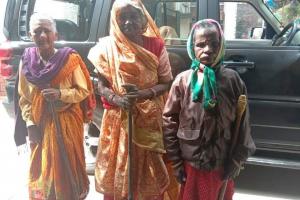
New Delhi, March 15 (IANS) The world's geriatric population (people aged 60 and older) will cross two billion by 2050 from nearly one billion in 2020 and in the case of a pandemic like novel coronavirus, these loved ones are at high risk of death owing to a multitude of factors like underlying conditions and low immunity. ## According to the World Health Organisation (WHO), 125 million people are aged 80 years or older today and by 2050, there will be almost this many (120 million) living in China alone -- and 434 million people in this age group worldwide. ## A recent report published in the medical journal JAMA which examined more than 72,000 Chinese coronavirus patients found that the overall fatality rate was 2.3 per cent. But in adults over 80, the fatality rate rose to 15 per cent. ## By 2050, 80 per cent of all older people will live in low- and middle-income countries where health facilities are already dismal. ## Public health experts at the Centers for Disease Control and Prevention (CDC) are urging older adults, especially those who already have health challenges, to "stay at home as much as possible" to avoid getting COVID-19. ## Early research shows that older people are twice as likely to have serious complications if they get COVID-19. ## People with chronic conditions such as heart disease, lung disease and diabetes, are more at risk for severe cases of COVID-19. ## "If you are at higher risk for serious illness from COVID-19 because of your age or because you have a serious long-term health problem, it is extra-important for you to take actions to reduce your risk of getting sick with the disease," said public health experts at the CDC. ## Older adults living in communities where the virus has spread should take extra precautions like avoiding public places. ## According to Ravi Shekhar Jha, Senior Consultant and Head of the Department, Pulmonology, Fortis Escorts Hospital Faridabad, "Older adults' lungs take more time in clearing up and there is not clear secretion from the lung. All these factors make them extremely vulnerable to the coronavirus." ## Another analysis of all cases diagnosed in China found that 86.6 per cent were aged 30-79 years. ## Data from Korea Centers for Disease Control and Prevention (KCDC) showed that the mortality rate of COVID-19 patients aged 80 or older was 5.4 per cent, compared with an average mortality rate of 0.6 per cent. ## According to Rajesh Chawla, Senior Consultant, Respiratory and Critical Care, Indraprastha Apollo Hospital in New Delhi, elderly people above 50 years of age suffering from diabetes and heart disease need to take extra precautions as coronavirus can lead to severe conditions in them. ## The CDC advises against non-essential plane travel for older adults. ## "The data continues to say that the people who are at higher risk for severe disease and death are those who are older and with underlying health conditions," according to Nancy Messonnier, MD, director of the National Center for Immunization and Respiratory Diseases at the CDC. ## Depending on how severe the outbreak is, public health officials may recommend community actions to reduce people's risk of being exposed to COVID-19. These actions can slow the spread and reduce the impact of disease. ## If you are at higher risk for serious illness from COVID-19 because of your age or because you have a serious long-term health problem, it is extra important for you to take actions to reduce your risk of getting sick with the disease. ## If you have someone senior at home, it is time to take some extra measures for your loved ones till the COVID-19 scare goes away. ## For more and the latest news about Lifestyle, stay tuned to us.

Heavy stress may shorten our life expectancy
2278 days ago
Lifestyle

Heavy stress may shorten our life expectancy

London, March 15 (IANS) If you are taking too much stress, read this carefully. Researchers have found that life expectancy is influenced not only by the traditional lifestyle-related risk factors but also by factors related to a person's quality of life, such as heavy stress. ## The study, published in the journal BMJ Open, was based on data collected from men and women aged 25 to 74 in the Finnish National FINRISK Study 1987-2007 through questionnaires and measurements. The rate of mortality was followed until the end of 2014. ## For the findings, the researchers calculated the effects of multiple risk factors, including lifestyle-related ones, to the life expectancy of men and women. ## "Before, life expectancy has usually been assessed based on only a few sociodemographic background factor groups, such as age, sex, and education. In this study, we wanted to assess the impact of several different factors to a person's life expectancy, so we could compare their effects," said study researcher Tommi Harkanen from National Institute for Health and Welfare in Finland. ## The researchers calculated the life expectancies by changing the values of each risk factor at a time and keeping the values of other factors constant. ## Only the BMI, blood pressure, and cholesterol levels were allowed to be changed when the values related to lifestyle factors were changed. ## They found that the biggest causes for shortened life expectancy for 30-year-old men are smoking and diabetes. Smoking takes 6.6 years and diabetes 6.5 years out of their life expectancy. ## Being under heavy stress shortens their life expectancy by 2.8 years, the study said. ## The research also revealed that a lack of exercise strongly reduced the life expectancy of 30-year-old men -- by 2.4 years. ## On the other hand, things such as the consumption of plenty of fruits and vegetables could increase life expectancy: eating fruit by 1.4 years and eating vegetables by 0.9 years. ## The same factors impacted the life expectancy of both men and women. ## For 30-year-old women, e.g. smoking shortened the life expectancy by 5.5 years, diabetes by 5.3 years, and heavy stress by 2.3 years. The effects to the life expectancy of older people were similar but smaller than in younger age groups. ## Differences between the life expectancies of men and women largely due to risk factors that can be changed, according to the researchers. ## "What was interesting about the study was how small the difference in the life expectancy of 30-year men and women was based on the same risk factor values -- only 1.6 years," said study researcher Seppo Koskinen. ## The lifestyle choices that increase mortality, such as smoking, heavy alcohol use, unhealthy diet, and lack of exercise, are most common in the population groups whose social position is the weakest, the study said. ## For more and the latest news about Lifestyle, stay tuned to us.

Infant cereal consumption linked to improved nutrient intake
2279 days ago
Lifestyle

Infant cereal consumption linked to improved nutrient intake

New York, March 14 (IANS) Dear parents, please take note. Infants and toddlers who consumed baby cereal, such as rice cereal, had higher intakes of key nutrients of concern, such as calcium, magnesium, iron, zinc and vitamin E, say researchers. ## According to the study, baby cereal consumers were also found to be less likely to have inadequate intakes of iron, calcium and vitamin E -- important nutrients for an infant's development. ## The findings, published in the journal AIMS Public Health, illustrated the importance of rice baby cereal in the diets of infants and toddlers in achieving proper nutrition. ## "The results of this study build a strong case for the benefits of feeding your infant baby cereal," said the study's researcher Theresa Nicklas from Baylor College of Medicine in the US. ## "As the US Dietary Guidelines Advisory Committee looks to evaluate food patterns and nutrient status of infants aged 0 to 23 months, it is important to consider the role of baby cereal in the diets of infants and toddlers," Nicklas added. ## For the findings, the research team examined National Health and Nutrition Examination Survey (NHANES) data, a national survey of food intake, from 2001 to 2014 to assess food intake in infants and toddlers from birth to 23 months. ## The study evaluated four age ranges - ages 0 to 3 months, 4 to 6 months, 7 to 11 months and 12 to 23 months - and the role of cereal consumption such as rice cereal. ## Researchers investigated whether baby cereal consumption (e.g. rice cereal) was related to different eating patterns, nutrient status and intakes of added sugars, saturated fat and sodium, when compared to non-cereal consumers. ## When introduced as early as four months, baby cereal, including rice cereal, is associated with improved nutrient status, the study said. ## From four to six months of age, babies who ate cereal took in more calories, carbohydrates, whole grains and key nutrients, like vitamin B6, calcium, iron and magnesium. ## As infants get older, the results remained similar. From seven to 11 months, cereal consumers were found to have higher intakes of carbohydrates, vitamin E, calcium, iron, zinc and magnesium. ## According to the researchers, beyond the first year of life, baby cereal consumption continued to be associated with greater iron, zinc and vitamin E intake. ## Overall, the study demonstrates there is a strong public health benefit to feeding infants ages 4 to 11 months infant baby cereal. ## Data indicates that feeding cereal, such as rice cereal, as one of babies' first foods has a positive impact on nutrient status. ## Babies who consumed rice and other infant cereals, during the first two years of life, had more complete and balanced nutrition than those who were not fed baby cereal. ## While more research is needed, this study demonstrates a link between feeding infants and toddlers baby cereal and an improved overall nutrition profile. ## For more and the latest news about Lifestyle, stay tuned to us.

Colorectal cancer on rise among young adults: Study
2281 days ago
Lifestyle

Colorectal cancer on rise among young adults: Study

London, March 11 (IANS) With the rise in incidence of colorectal cancer (CRC) among adults, it could no longer be considered a disease of older people, according to a study.## Although men in older age groups are well recognised to have higher incidence of colonic and rectal cancer, there is little difference in the incidence rates between men and women aged below 40 years.## For the study, published in the BJS (British Journal of Surgery), the researchers from the University of Bristol, UK, examined data on adults, diagnosed with colorectal cancer in England between 1974 and 2015.## The CRC, also known as bowel cancer, colon cancer, or rectal cancer, is the development of cancer from the colon or rectum (parts of the large intestine).## According to the study, of the 1,145,639 CRC cases among adults aged over 20 years between 1974 and 2015, 2,594 cases were in the 20-29 year age group, 11,406 in the 30-39 year age group and 42,134 in the 40-49 year age group.## The most sustained increase was seen in adults aged 20-29 years, the study said. The magnitude of increases was similar in both sexes and across income levels, it added.## The most pronounced increases was in the southern regions of England, according to the researchers and added, young patients needed more treatment to achieve similar outcomes than older people.## Changes in incidence rates could be used to plan future screening policy, preventative strategies, research agendas as well as increasing public understanding that younger people must be aware of symptoms of colorectal cancer, the researchers said.## The University of Bristol, the research university in Bristol, England, is ranked 49th by the QS World University Rankings 2020. It's ranked in the top 10 of UK universities in 2020.##

Holi celebrated across West Bengal
2282 days ago
Lifestyle

Holi celebrated across West Bengal

Kolkata, March 10 (IANS) Holi, the festival of colours, was celebrated with mirth and gaiety across West Bengal on Tuesday as people participated in large numbers draped in festive spirits. ## While the Bengali community predominantly celebrated 'Dol' (spring festival similar to Holi) a day back, it was the turn of the non-Bengali communities to splash colours on one another to soak in the spirit of revelry during the day. ## The city's hot spots, including amusement parks and community centres, saw substantial footfalls as revellers feasted and spent time with friends and family with peppy Bollywood numbers being played in the background. ## Plates of crunchy gujiyas, sev, laddoos and other sweets vanished from the plates in the blink of an eye as tall glasses of coolers like lassi and thandai were enjoyed by the old and young alike as they smeared gulal on each other. ## For more and the latest news about Lifestyle, stay tuned to us.

Loneliness may increase inflammation in body
2286 days ago
Lifestyle

Loneliness may increase inflammation in body

London, March 7 (IANS) Researchers have found that social isolation and loneliness could be associated with increased inflammation in the body, though loneliness and isolation should neither be used interchangeably nor grouped together.## For arriving at the findings, published in the journal Neuroscience & Biobehavioural Reviews, researchers analysed 30 previous studies to investigate the link between social isolation and loneliness with inflammation in the body.## "Our results suggest loneliness and social isolation are linked with different inflammatory markers. This shows how important it is to distinguish between loneliness and isolation, and that these terms should neither be used interchangeably nor grouped together," said study researcher Christina Victor, Professor at Brunel University in UK.## According to the researchers, inflammation is the body's way of signaling the immune system to heal and repair damaged tissue, as well as defending itself against viruses and bacteria.## Inflammation can eventually start damaging healthy cells, tissues, and organs and lead to an increased risk of developing non-communicable diseases such as cardiovascular disease.## Researchers found that social isolation, the objective state of being isolated from other people, was associated with the presence of C-reactive protein, a protein substance released into the bloodstream within hours of a tissue injury, and increased levels of the glycoprotein fibrinogen, which is converted into fibrin-based blood clots.## Interestingly, researchers also identified that the link between social isolation and physical inflammation was more likely to be observed in males than females.## Further work is needed to clarify why this might be, but previous work suggests that males and females might respond differently to social stressors, the said.## "The evidence we examined suggests that social isolation may be linked with inflammation, but the results for a direct link between loneliness and inflammation were less convincing," said study researcher Kimberley Smith, Professor at the University of Surrey in UK.## "We believe these results are an important first step in helping us to better understand how loneliness and social isolation may be linked with health outcomes," Smith added.## For more and latest news about Life and Style, stay tuned with us.

Smartphones may make your headaches worse: AIIMS
2287 days ago
Lifestyle

Smartphones may make your headaches worse: AIIMS

New Delhi, March 5 (IANS) Smartphone users who suffer from regular headaches and migraines may be more likely to use painkillers and find less relief, say researchers at All India Institute of Medical Sciences (AIIMS).## For the study, published in the jorunal Neurology: Clinical Practice, researchers have identified 400 people in India with a primary headache condition, which includes migraine, tension headache and other headache types that are not due to another condition.## "While the results need to be confirmed with larger and more rigorous studies, the findings are concerning, as smartphone use is growing rapidly and has been linked to a number of symptoms, with headache being the most common," said study author Deepti Vibha, from AIIMS in New Delhi.## According to the researchers, the study does not prove that smartphone use causes greater use of pain medication and less relief; it only shows an association.## For the findings, the research team asked the people about their smartphone use and their headaches and medication use.## Of the 400 people, 206 were smartphone users and 194 were non-users.## People who did not use smartphones were older, had a lower education level and were more likely to have a low socioeconomic status than those who did use smartphones.## The smartphone users were more likely to take pain-relieving drugs for their headaches than non-users, with 96 percent of smartphone users taking the drugs as compared to 81 percent of non-users.## Smartphone users took an average of eight pills per month compared to five pills per month for non-users, the study said.## Smartphone users also reported less relief from the medication, with 84 percent gaining moderate or complete relief of headache pain compared to 94 percent of non-users.## However, the study did not find any difference between the two groups in how often headaches occurred, how long they lasted or how severe they were.## The researchers noted that the study only examined people at one point in time; it did not follow them to look for changes over time.## "The root of the problem is not yet clear. Is it a user's neck position? Or the phone's lighting? Or eye strain? Or the stress of being connected at all times? Answers will likely emerge in upcoming years and eventually guide strategies for more sustainable use of the devices," said Heidi Moawad, member of the American Academy of Neurology.## "Features such as hands-free settings, voice activation, and audio functions could potentially hold the key to helping smartphone users benefit from their phones without exacerbating their headaches," Moawad added.## For more and latest news about Technology, stay tuned with us.